March 13, 2026
Picture this: your child comes racing into the kitchen, mouth wide open, finger pressing against a front tooth that is wiggling in a way it absolutely was not yesterday. Your instinct? Fix it. Most parents feel the same pull. There is something deeply uncomfortable about seeing a tooth look “wrong” in a child’s mouth, and the urge to do something, anything, is real.
But here is the truth many parents need to hear: not every loose tooth needs intervention, and the wrong kind of intervention can cause real damage. At Adventure Smiles, our pediatric dental team talks to parents every week who tried a home fix. talks to parents every single week who tried a home fix and ended up making things more complicated (and more expensive) than they needed to be.
This guide covers everything you need to know: what causes loose teeth, what is safe to do at home, what is not, and exactly when to call a kid friendly dentist in Las Vegas.
Understanding Why Teeth Get Loose in the First Place
Before you do anything, you need to know what kind of loose tooth you are actually dealing with. They are not all the same.
The Natural Kind: Baby Teeth Making Way for Adult Teeth
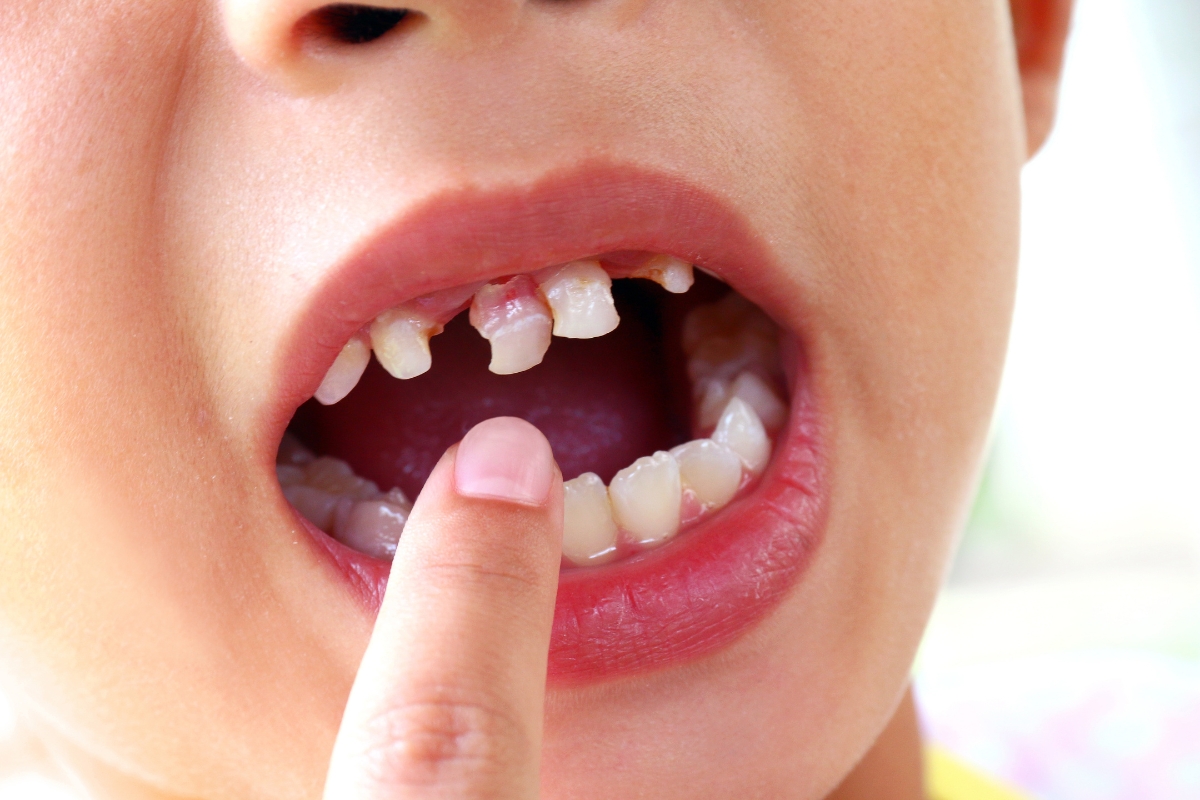
Between ages 5 and 12, children lose all 20 of their primary (baby) teeth. The process is driven by the permanent tooth below slowly pushing upward, which dissolves the baby tooth’s root over time. This is textbook normal and does not need any intervention beyond patience and maybe some soft food.
The Traumatic Kind: Injury-Related Looseness
When a tooth becomes suddenly loose after a fall, a sports collision, or any impact to the face or mouth, that is a different situation entirely. Trauma-related loose teeth need dental evaluation within 24-48 hours, even if the tooth looks fine from the outside. X-rays reveal damage to roots and surrounding bone that the naked eye simply cannot see.
The Concerning Kind: Looseness From Disease or Decay
In rare cases, a child’s tooth may become loose due to severe tooth decay that has spread to the root, gum disease (yes, children can develop forms of gum disease), or certain systemic health conditions. This kind of looseness is usually accompanied by other symptoms: redness, swelling, pain, or bad breath that does not go away.
Here is a quick checklist to help you figure out which category your child is in:
- Normal development: Child is 5-12 years old, the tooth has been gradually loosening, no pain, no swelling, no injury.
- Needs same-day or next-day dental care: Loose tooth after a fall or hit, adult tooth is loose, child is under age 4 or over age 13 with a loose tooth.
- Call the dentist now: Swelling on the gum or face, fever, pus or white bumps near the loose tooth, or the tooth is visibly shifted out of position.
Can You Actually Tighten a Loose Tooth at Home? The Honest Answer
This is the question at the heart of this article, and it deserves a direct answer. You cannot safely tighten a loose tooth at home if it became loose due to injury or disease. And if it is a naturally loose baby tooth, you do not want to tighten it. You want it to come out.
Here is what various scenarios actually call for:
Naturally loose baby tooth: Leave it alone. Encourage gentle tongue pressure. It will come out when it is ready.
Baby tooth knocked loose by a mild impact: Call your Las Vegas pediatric dentist for evaluation. Do not try to push it back into place.
Permanent tooth that is loose: This is a dental emergency. Call Adventure Smiles or an emergency dental provider immediately.
Tooth that looks infected around the gum: Do not touch it. Call the dentist today.
Bottom line: If your child needs a tooth stabilized after injury, your Las Vegas dentist has professional-grade bonding and splinting techniques. Home methods do not come close to replicating this, and many cause new problems.
8 Practical Tips for Parents: What You Should Actually Do
Tip 1: Follow Your Dentist’s Post-Care Instructions to the Letter
If your child has already been seen by a dentist (after an injury, a procedure, or even a routine visit where a loose tooth was discussed), those post-care instructions are not suggestions. They are based on the specific clinical picture your dentist observed, and they exist to protect your child’s recovery.
Write them down, photograph the instruction sheet, or set a phone reminder for each step. Forgetting to avoid hard foods for two days or skipping a follow-up rinse can undo careful dental work.
Practical tip: Create a note in your phone titled “Tooth Care Rules” after every dental visit and update it based on current instructions. It takes 60 seconds and saves a lot of confusion at dinner.
Tip 2: Use a Cold Compress for Swelling and Pain Relief
If the loose tooth is the result of a bump or fall and there is visible swelling on the cheek, lip, or jaw area, a cold compress is your best first tool. Wrap ice in a thin cloth or use a gel pack and apply it to the outside of the face for 10-15 minutes at a stretch. Remove it for at least 10 minutes before reapplying.
Cold compresses reduce inflammation, slow tissue swelling, and provide real pain relief. They do not “fix” the underlying issue, but they buy you comfort and time while you contact your dentist.
What not to do: Never apply ice directly to the gum or tooth. The sharp cold of direct contact with ice can cause additional tissue stress.
Tip 3: Let Your Child Rest After Any Dental Injury
After a dental injury, keep your child calm and resting for at least a couple of hours. Rough play, running, or any activity that involves impact near the face is off limits until a dentist has cleared the tooth. This is not overprotective. It is practical: a tooth that is partially displaced can be worsened significantly by secondary impact.
Keep them occupied with a quiet activity, offer something cold and soft to eat, and use that time to call the dental office.
Tip 4: Switch to Soft Foods Until the Tooth is Resolved
Chewing on a loose tooth puts mechanical stress on the root and surrounding tissue. Even if the tooth does not hurt, biting down on hard or crunchy foods can displace it further or cause pain that was not there before.
Good soft food options during this time include:
- Yogurt, smoothies, and milk-based drinks
- Scrambled eggs, soft-cooked oatmeal
- Mashed sweet potatoes, avocado, soft banana
- Soft pasta, rice, or soup
- Applesauce, pudding, gelatin
Hard passes while the tooth is loose include: raw carrots, apples, corn on the cob, hard pretzels, gummy candies, and tough meats. These are not worth the risk.
Tip 5: Keep Up With Gentle Oral Hygiene
A loose tooth is not a pass to skip brushing. Food debris and bacteria collect around wobbly teeth and can cause gum inflammation or even infection if left unaddressed. Use a soft-bristled toothbrush and have your child brush gently around (not on top of) the loose tooth.
If brushing is too painful, warm salt water rinses work well as a temporary substitute. Use half a teaspoon of plain table salt in a cup of warm (not hot) water and have your child swish for about 30 seconds. This cleans the area and has a mild antibacterial effect.
Avoid commercial mouthwashes that contain alcohol for children, especially around irritated gum tissue.
Tip 6: Skip Every DIY Tooth Tightening Trend You Have Seen Online
It has to be said again because this is where many parents cause real harm. Home tooth tightening methods do not work and some are genuinely dangerous.
Here is what we see parents trying and why each one is a bad idea:
- Clove oil applied repeatedly: Can chemically burn delicate gum tissue with overuse. Has no tooth-stabilizing effect.
- Dental bonding glue from the drugstore: Designed for temporarily cementing a crown back on, not for mobile natural teeth. Traps bacteria and makes professional evaluation harder.
- String/floss tied around the tooth: Can cut into the gum, cause the tooth to break rather than pull cleanly, and is extremely uncomfortable for children.
- Pressing the tooth firmly multiple times daily: Repeated pressure on a traumatically loosened tooth can push it further out of alignment or damage the root.
- Turmeric, salt packs, or other pastes directly on the gum: No clinical evidence supports any of these for tooth stabilization. They can irritate or infect the tissue.
If professional stabilization is needed, your Las Vegas pediatric dentist will use a dental splint or composite bonding technique that actually works. Trust the science.
Tip 7: Avoid Alcohol-Based Rinses and Adult Numbing Gels
Two categories of products are commonly misused by well-meaning parents in this situation. First: alcohol-based mouthwash. Most adult antiseptic rinses contain 18-26% alcohol, which is both inappropriate for children and especially irritating to an already-inflamed gum site. Stick to plain salt water or a dentist-recommended pediatric rinse.
Second: over-the-counter numbing gels. Products containing benzocaine were primarily designed for teething infants and carry real safety warnings regarding overuse. More importantly, numbing the area can mask pain signals that you need to track to monitor recovery. Pain management for a loose tooth injury should follow your dentist’s recommendations, not a general-use OTC product.
Tip 8: Monitor the Situation and Do Not Put Off the Dental Visit
For a naturally loose baby tooth, most parents do not need a dentist visit. But watch for warning signs that change that equation:
- The loose tooth has not come out after 2 months of wiggling
- The permanent tooth is visibly growing behind the loose baby tooth (called “shark teeth”)
- Swelling, redness, or a pimple-like bump appears on the gum
- Your child has a fever alongside tooth symptoms
- The tooth looks gray, darkened, or visibly shifted
For any tooth that became loose due to trauma, book an appointment within 24-48 hours regardless of how it looks. Adventure Smiles offers emergency pediatric dental appointments in Las Vegas so your child gets seen fast, not weeks from now.
Schedule Your Child’s Appointment at Adventure Smiles, Las Vegas
At Adventure Smiles, we built our practice around one simple belief: kids deserve a dental experience that does not scare them. Our Las Vegas office is specifically designed for children, from the welcoming environment to our team’s training in pediatric communication techniques that reduce anxiety and build trust.
We serve families throughout Las Vegas and surrounding Nevada communities. Whether your child needs a routine checkup, has a dental emergency, or you just want a professional opinion on that wiggly tooth, we are here.
Visit us at adventure smiles or call our Las Vegas office to schedule today.
For additional parent resources on children’s dental health, we recommend the American Academy of Pediatric Dentistry one of the most reliable sources for evidence-based pediatric dental guidance.
Frequently Asked Questions
Q1: My 5-year-old has a very loose tooth. Is that too early?
Five years old is on the early side of normal but not outside the range. Some children lose their first tooth as early as 4.5 years. If your child is younger than 4 or if several teeth are loose without a clear developmental reason, a visit with our pediatric dental team can rule out any underlying issue and give you peace of mind.
Q2: A baby tooth was knocked out completely after a fall. What do I do?
First, stay calm. If a baby tooth is knocked out entirely by trauma, do not try to reinsert it. Baby teeth that are knocked out are generally not replanted because doing so can interfere with the permanent tooth developing below. Pick up the tooth, place it in a small container with milk (not water), and bring it to the dentist. Your dentist will evaluate the socket, check for bone damage, and may recommend a space maintainer to preserve room for the adult tooth.
Q3: Is it okay for my child to wiggle the tooth with their tongue or finger?
Gentle, natural wiggling is fine and actually part of how baby teeth complete their exit. What you want to avoid is aggressive twisting, pulling before the tooth is ready, or pressing on it after a traumatic injury. A good rule of thumb: if your child is wiggling it comfortably on their own, that is fine. If they are crying from the pain of touching it, that is a sign the tooth is not ready and may need professional evaluation.
Q4: How do I know if the loose tooth is infected?
Warning signs of infection include: gum tissue around the tooth that is swollen or has a grayish color, a white or yellow bump on the gum (called a dental abscess or fistula), pain that is getting worse rather than better, a bad taste in the mouth that does not go away, or fever. Any combination of these symptoms means call your kid friendly dentist near me in Las Vegas right away, not tomorrow.
Q5: My child is terrified of the dentist. How does Adventure Smiles handle dental-anxious kids?
This is actually one of our specialties. At Adventure Smiles, we use a pediatric-specific approach that includes explaining procedures in child-friendly language, allowing children to see and touch tools before they are used (a technique called “tell-show-do”), creating a calm and welcoming office environment, and never rushing or forcing a child through a procedure. Many of our most anxious first-time patients become some of our most enthusiastic regulars. We genuinely love what we do, and kids can feel that.
Q6: Can a loose permanent tooth stabilize on its own without treatment?
Sometimes, if the looseness is mild and caused by a minor impact with no root or bone damage, a permanent tooth can firm back up over a few weeks. However, you cannot determine this from home. A dental X-ray is needed to confirm that the root is intact and the supporting bone has not been compromised. Do not make the call to wait and see without a professional opinion first.
Q7: Is it safe to use drugstore dental cement on a loose tooth?
No, not for natural loose teeth. Over-the-counter dental cement products are designed for temporarily re-securing a loose crown or inlay, not for stabilizing a mobile tooth in its socket. Using them on a loose natural tooth traps bacteria underneath, can damage the gum tissue, and makes it harder for your dentist to properly assess and treat the situation. Call us instead.
Q8: How long should a loose tooth take to fall out?
Once a baby tooth starts wiggling noticeably, it typically falls out within a few days to a few weeks. If a tooth has been visibly loose for more than 8 weeks, or if the adult tooth is already erupting behind it (creating two rows of teeth), schedule a visit. A simple, gentle extraction may be all that is needed to guide the adult tooth into proper position. We handle this procedure all the time in our Las Vegas office, and it is much simpler than most parents expect.
Final Thoughts: Less Guessing, More Smiling
Loose teeth are one of the most common childhood dental events, and in the vast majority of cases, they resolve beautifully on their own. What they do not need is home remedies, DIY tightening attempts, or panicked interventions based on something you watched online at midnight.
What they do need (and what your child deserves) is a parent who knows the difference between “let it be” and “call the dentist now.” This guide exists to help you make that call with confidence.
At Adventure Smiles in Las Vegas, Nevada, we are here for both. Whether you are a first-time parent with a five-year-old losing her first tooth, or you are dealing with an unexpected dental injury on a Tuesday night, our team is ready to help. We are a trusted pediatric dental team that Las Vegas families rely on for gentle, honest, and expert care.
Call us. Book online. Let’s take care of that smile together.